Loading page
Tarot Reflectionpublished on
Tarot for Self-Reflection, Not Prediction
Tarot becomes more useful when it is treated less like a prediction machine and more like a symbolic mirror. The cards do not need to take away your agency to be meaningful. They can help you see what you are bringing into a question: hope, fear, avoidance, desire, grief, or readiness.
A reflective tarot practice begins with a better question. Instead of asking, "What will happen?" try asking, "What am I not seeing clearly?" or "What kind of response would help me stay aligned?" The shift is subtle, but important. Prediction asks the future to decide for you. Reflection asks you to participate.
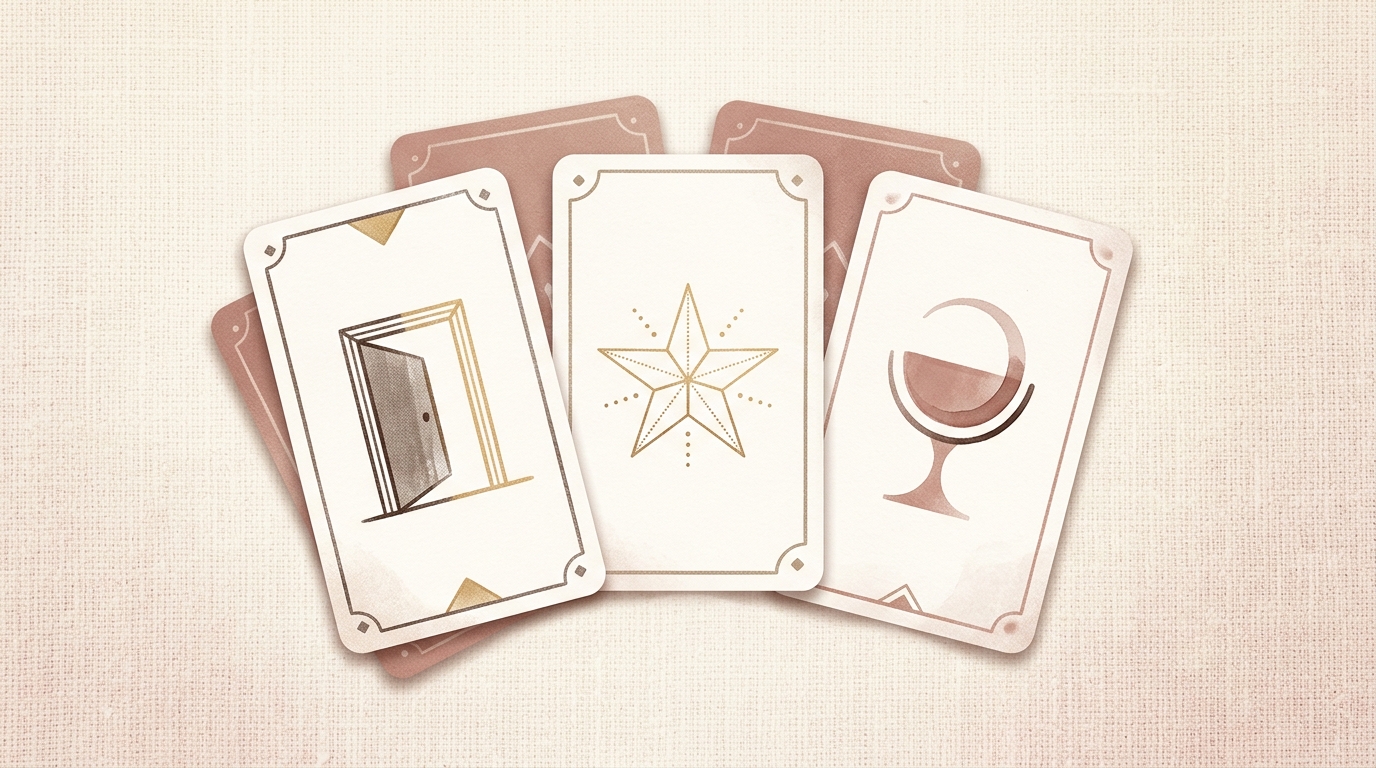
The card is a doorway
A tarot card offers images, tension, archetypes, and contrast. The Tower may ask where a structure is no longer honest. The Star may ask what hope looks like after loss. The Hermit may ask whether solitude is wisdom or withdrawal. The meaning emerges through relationship with your real situation.
Journal before interpreting too much
When you pull a card, write your first reaction before reading any explanation. What do you notice? What do you resist? What part of the image feels alive? Your response is part of the reading.
Keep agency at the center
A healthy tarot reading should leave you more responsible, not less. If an interpretation makes you fatalistic, pause. Ask: What choice is still mine? The best readings return power to attention, truth, and action.
In BuddhaWish, tarot is framed as reflection because that is where it can serve daily life. The cards help you ask better questions. You still choose how to answer them.
Share
Related Notes
No related notes yet. Browse Wisdom Notes for more reflection guides.
Back to Wisdom Notes